
Survival Mode: The Obstacle between You and your Escape Hatch
Get out of it as soon as you can

When you tell people you’re burnt out, the responses are usually one of the following:
Take some time off
Set boundaries
Change jobs
But what if you’ve tried all these things and none of them worked?
You’re still dragging yourself to work in the morning, dreading the hours at work, and burnt out at the end of each day.
When burnout continues to persist despite your best efforts to “fix” it, it starts to feel like survival is the best you can hope for – not a life that you enjoy, just one where you keep grasping for the next breath.
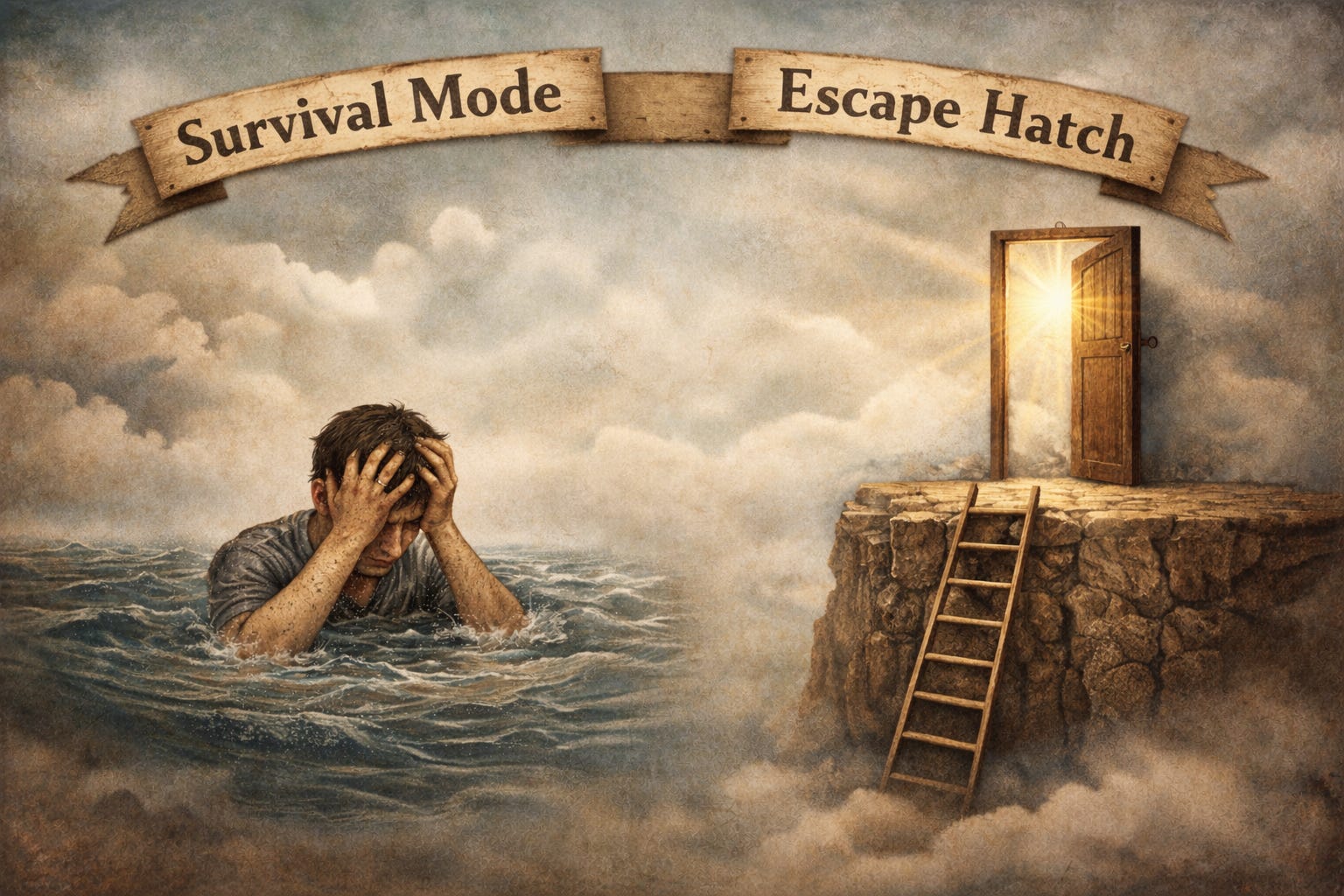
Survival Mode
Survival mode is what comes after burnout.
It’s the state you enter when you’ve exhausted all the reasonable solutions. You’ve taken time off, set boundaries and even changed jobs. Nothing worked. You recognize your situation as unsustainable, but you don’t know what else to do.
Your energy narrows. Every ounce of it goes toward surviving the day.
You drag yourself out of bed. You give yourself a pep talk. You grind through the workday.
Then you do it all over again the next day.
In survival mode, you’re not lazy or unmotivated. You simply ran out of “fixes” for your burnout. Your feeling of being stuck isn’t caused by a lack of effort. It’s caused by having tried everything you were told should work.
The only obvious option left is the nuclear one: Quit.
But you can’t do that either because your livelihood depends on the paycheck.
This is survival mode. The walls feel like they’re closing in.
I found myself in this predicament in the fall of 2025. I knew the problem wasn’t any single job. It was the corporate structure itself, the lack of freedom, and the misaligned incentives.
It was an absence of meaning.
I could tolerate it before because I distracted myself with new roles, new environments, new goals. In hindsight, those distractions didn’t solve the burnout. They just delayed it.
Eventually, the dread stopped responding to distractions.
I knew that working for myself was the logical next step. But entrepreneurship felt impossibly far away. It would take time, patience, and experimentation. All things that felt unavailable when I was already suffocating.
I was staring into the abyss — wanting relief now, while knowing that any real solution would take longer than I felt capable of enduring.
The real danger of survival mode
The danger of survival mode isn’t just mental exhaustion. It’s what it does to your ability to take risks.
Survival mode reduces your tolerance for uncertainty and your capacity for creativity. These are the exact ingredients required to build an escape hatch.
Even though I was already working on this Substack, survival mode made it difficult. After spending all my energy getting through the day, I struggled to write at night. Progress felt slow and doubt crept in. I questioned whether I was wasting my evenings writing into the void.
I wanted something immediate. Something that would let me quit right now without blowing up my life.
I wish I had built the escape hatch sooner.
The escape hatch problem
There’s two parts to an escape hatch: savings and cashflow. Savings to give you some buffer and cashflow to sustain your lifestyle independent from the 9 to 5.
To build either one, you need the ingredients mentioned above: time, patience, and experimentation. Most importantly, you needed a willingness to let things play out.
The irony is that survival mode makes all of that harder.
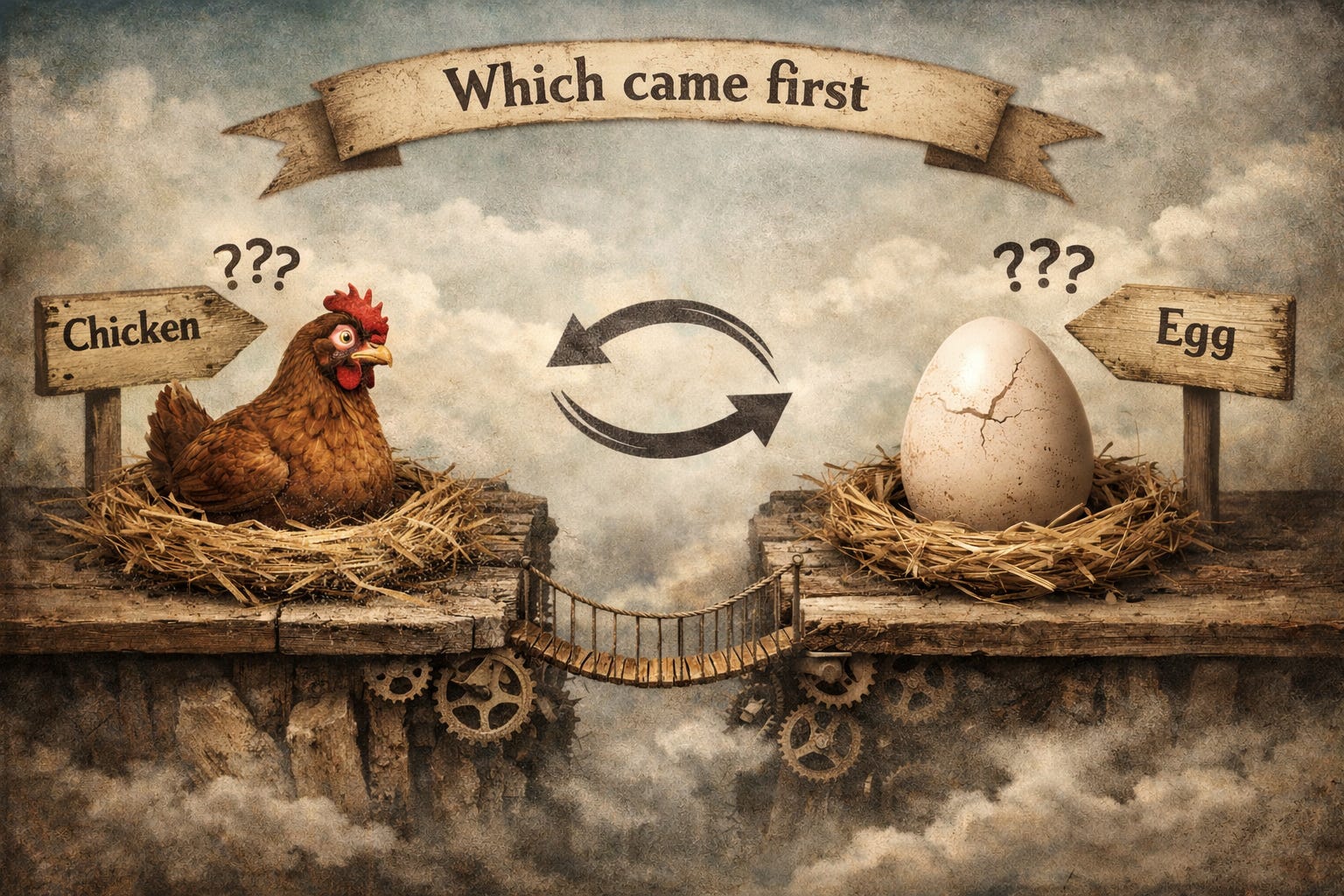
You need the escape hatch to get out of survival mode. But survival mode makes it difficult to build the escape hatch. It’s a negative feedback loop.
It’s a problem of chickens and eggs.
Finding an entry point
When a problem feels overwhelming, the mistake is trying to solve all of it at once. What helped me was finding a small entry point.
For me, that entry point was cutting expenses.
It’s not glamorous but it offers a high return on effort. Cutting expenses does two things immediately. One, it signals to your mind that you’re taking action. And two, it literally increases your savings.
Here’s the bonus: As expenses come down, dependency on the paycheck loosens. You start normalizing a lower cost of living, your runway extends, and a positive feedback loop begins.
I’ve written about my personal budgeting strategies here if you need extra inspiration, but the point here is simple. Start small, and focus on stabilizing.
When the pressure eases
As the dependency loosens, the pressure starts to ease. It doesn’t disappear, but you feel more air coming in. With that space, you claw back time and mental energy.
That energy can then go toward building the second part of the escape hatch – a sustainable cashflow.
Survival mode makes everything feel urgent. Escaping it requires slowing down just enough to think clearly again.
Getting out of survival mode
Survival mode is hard to recognize until you’re deep in it. But it’s not permanent.
You don’t get out by making one bold leap. You get out by stabilizing first, finding an entry point, then building deliberately.
Resolving burnout requires clarity and direction. It also requires stability. Without it, execution becomes nearly impossible.
That’s what this newsletter is about. Understanding burnout. Stabilizing. And building a path that is truly my own.
I love this
Getting out of burnout and survival mode feels overwhelming and impossible. Thank you for helping me see the first step.